Designed a self-service claims dashboard that cut support calls by 10%
Customer service was receiving hundreds of calls asking about claims. Policyholders called to ask basic questions about their claims: status updates, adjuster contact information, and next steps. But our online tools didn't provide those answers.
I built a dashboard that lets policyholders check claim status, upload documents, and contact their adjuster. The result: turning a 10-minute phone call into a 30-second self-service check.
Impact:
10% fewer support calls
100,000+ customers now use the self-service features
Worked with Customer Service, Claims Managers, and dev teams to ship product
Prototype walkthrough of claims dashboard.
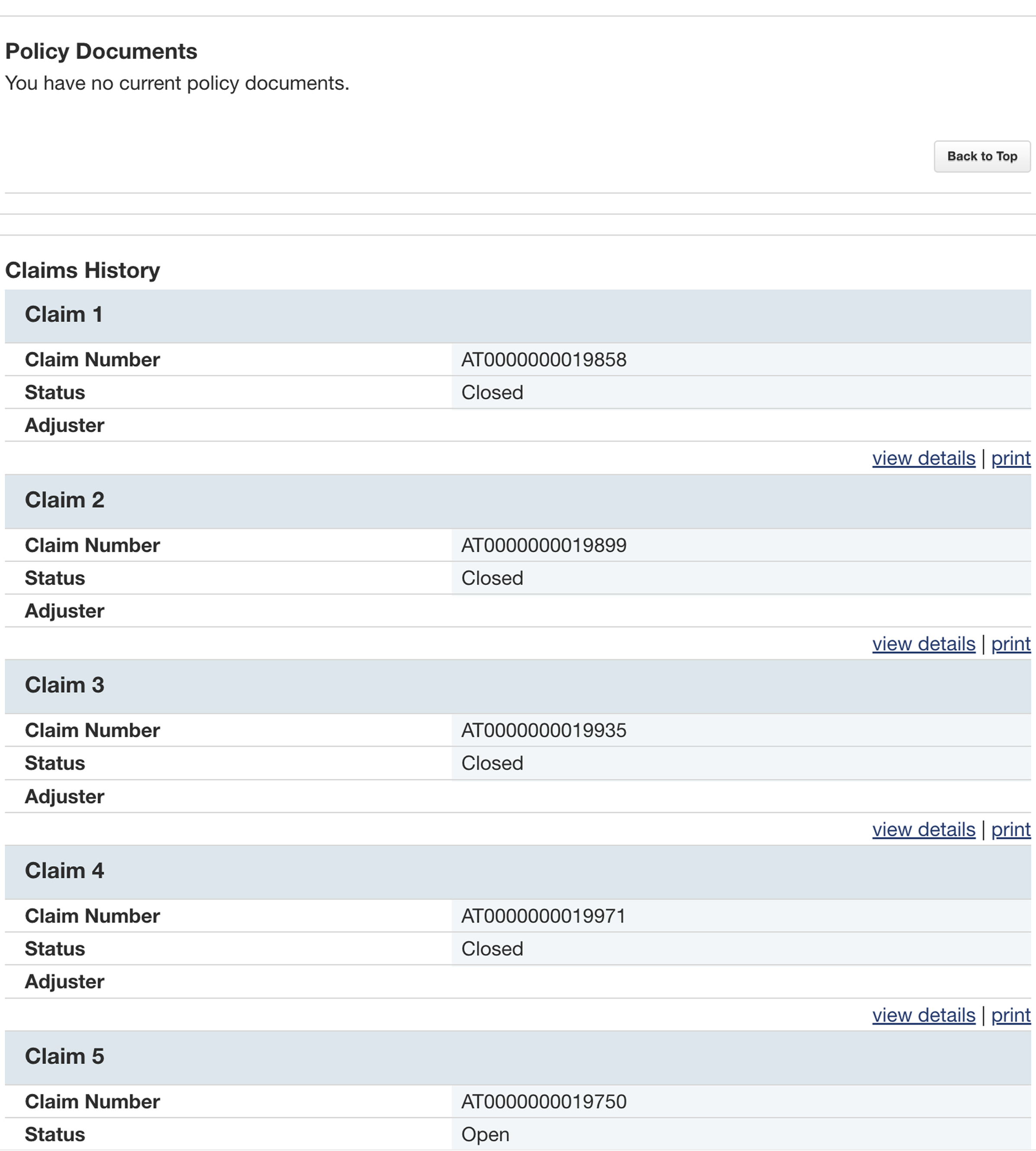
Claims were buried within policy details
Claims section appeared only after scrolling past policy details.
Claim information was hard to find and slow to navigate, creating unnecessary friction for customers.
Key issues included:
Claims appeared only after scrolling past policy details
Critical information was buried in collapsed sections
Adjuster ownership was unclear
Breakdowns in the claims experience
Key findings included:
Customers lacked visibility into claim status, next steps, and ownership
Internal handoffs between adjusters were fragmented and unclear
Phone calls became the primary way customers filled information gaps
High call volume overwhelmed claims and support teams
While these issues were visible in the interface, they were symptoms of deeper system‑level breakdowns.
Mapping both customer and internal workflows across the claims lifecycle revealed consistent disconnects between what customers expected and how claims were managed internally.
Stakeholder insights exposed the root causes behind claims friction
While usability issues were visible in the interface, stakeholder insights revealed why these problems persisted across teams and systems. Perspectives from claims managers, field adjusters, and customer service exposed consistent breakdowns in ownership, visibility, and communication.
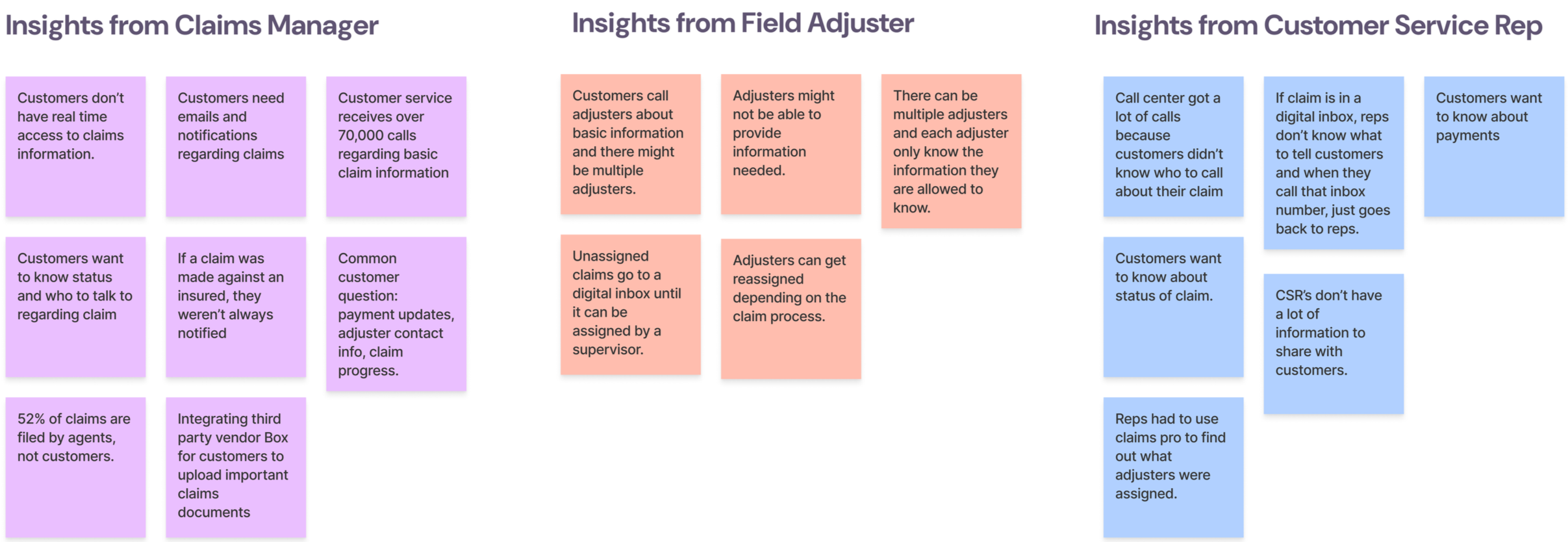
Root causes identified:
Customers relied on phone calls for basic claim information that should be available online
Claims‑related call volume overwhelmed customer service and adjuster teams
Customers lacked visibility into real‑time claim status and adjuster ownership
“In 2022, about 25% of calls that the call center received were regarding claim inquiries, which equated to over 70,000 calls.”
Clarifying the claims journey for customers
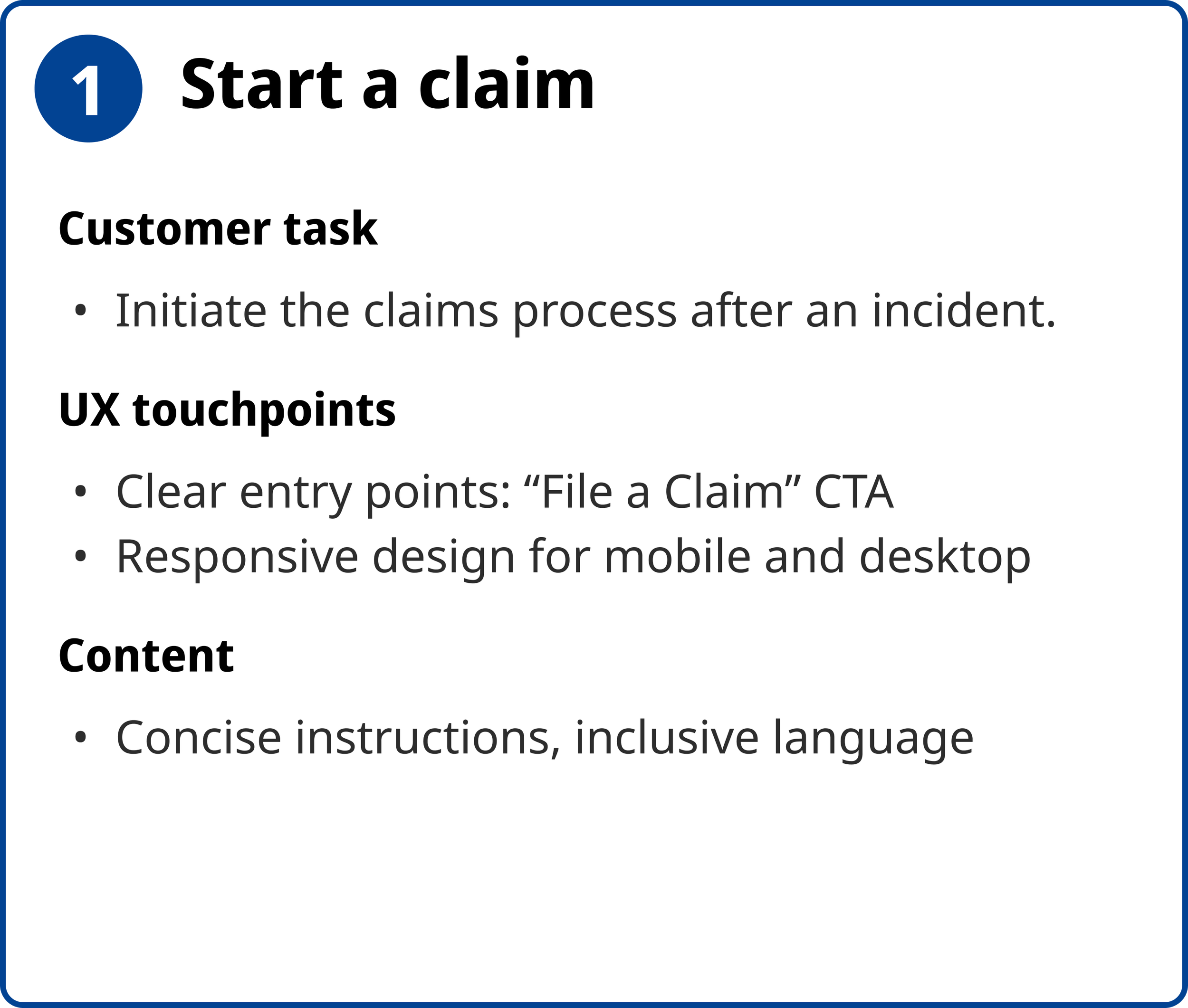
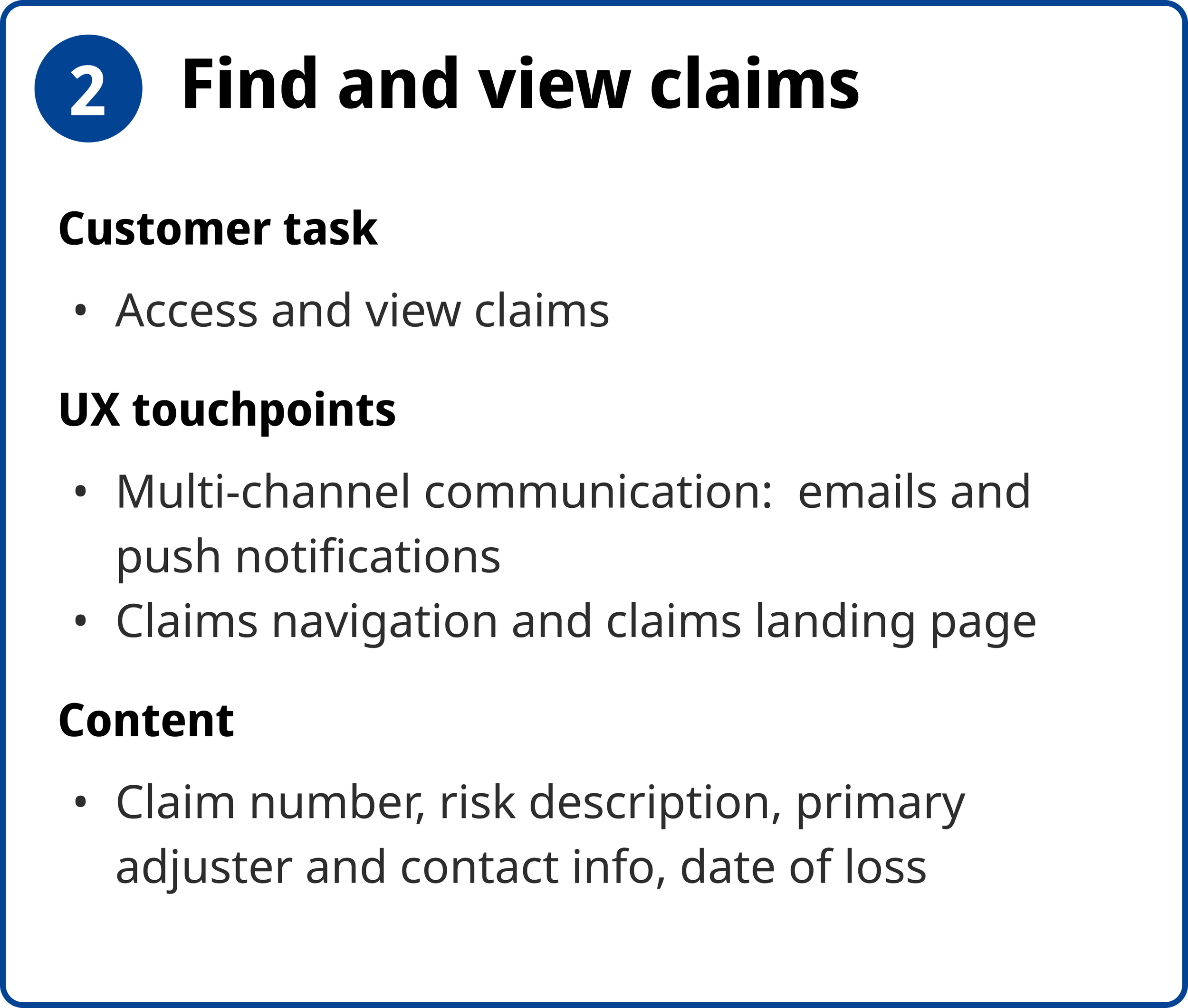
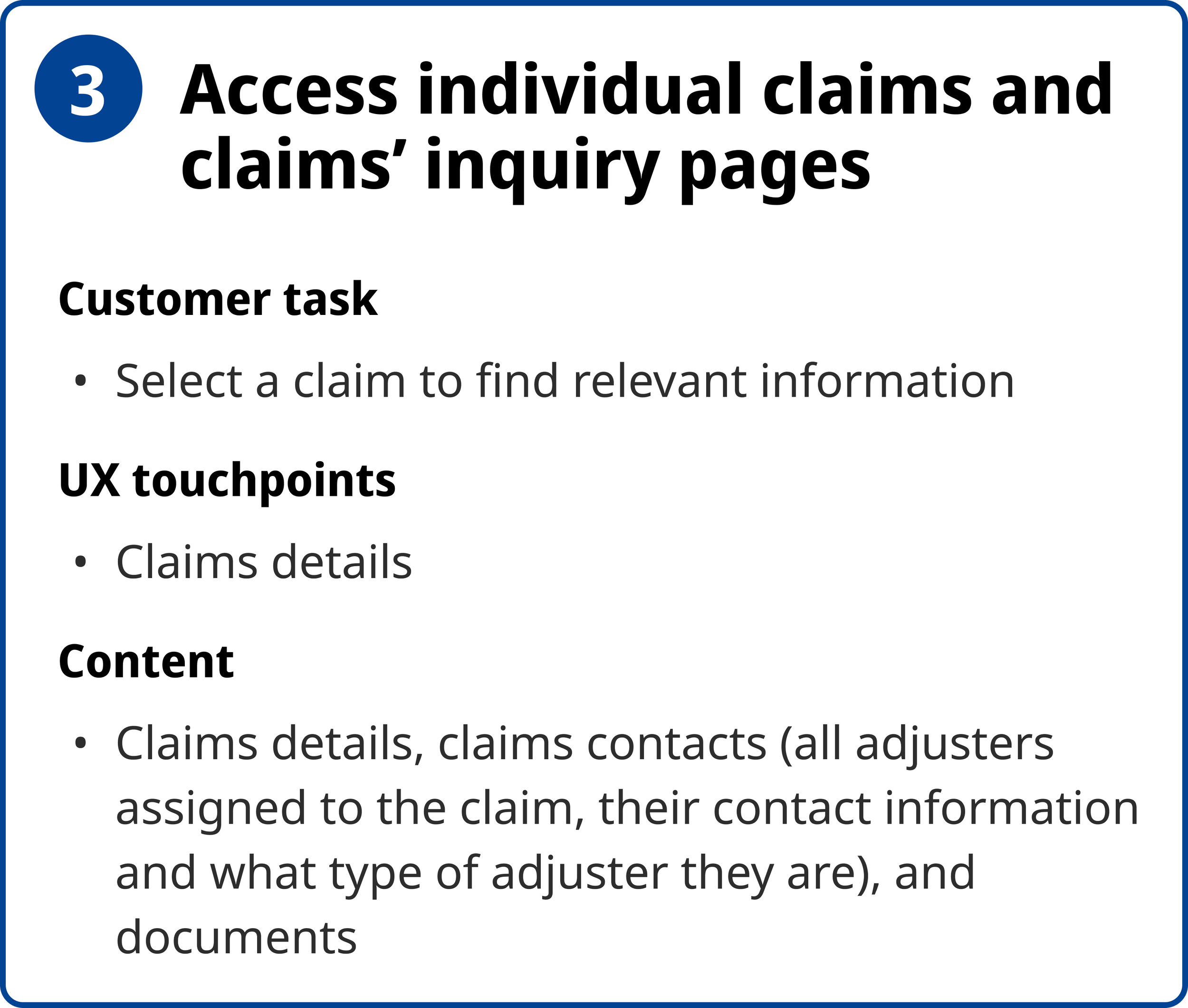
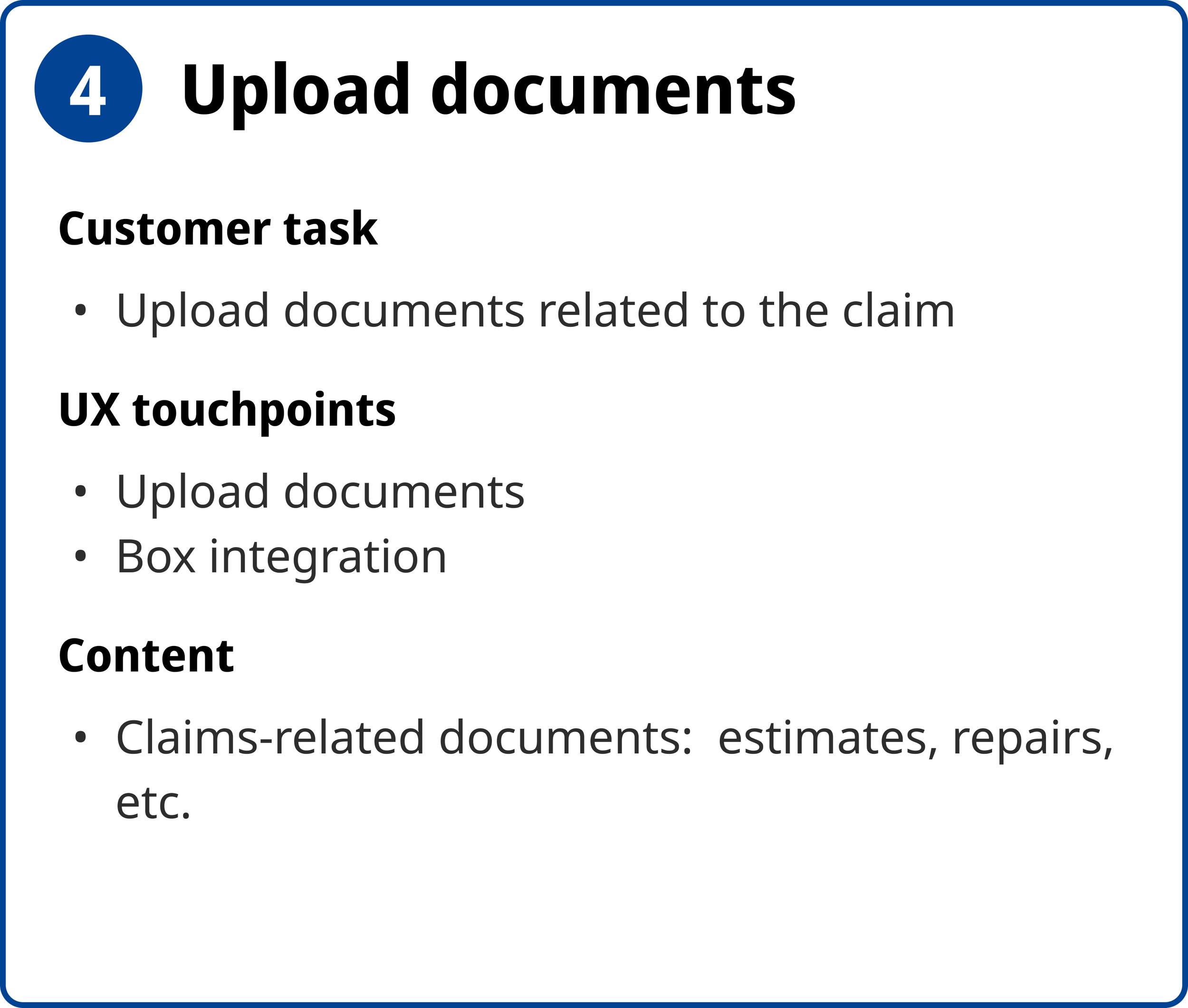
To reduce confusion and support self‑service, I restructured the claims experience into four clear, task‑oriented stages, giving customers visibility into where they were in the process and what actions were available at each step.
The experience was designed around the core tasks customers repeatedly needed to complete:
Start a claim
Find a claim
Access claim details
Upload documents
Each stage introduced focused touchpoints and content to reduce cognitive load, clarify ownership, and minimize the need for support calls.
Validating structure before visual design
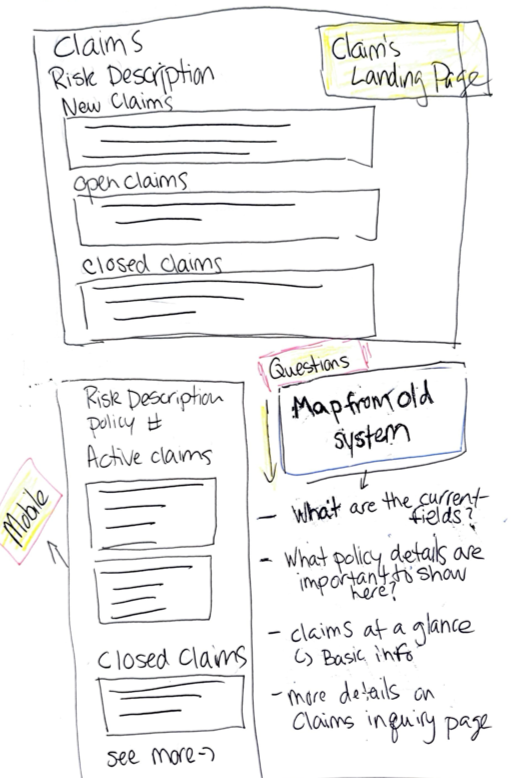
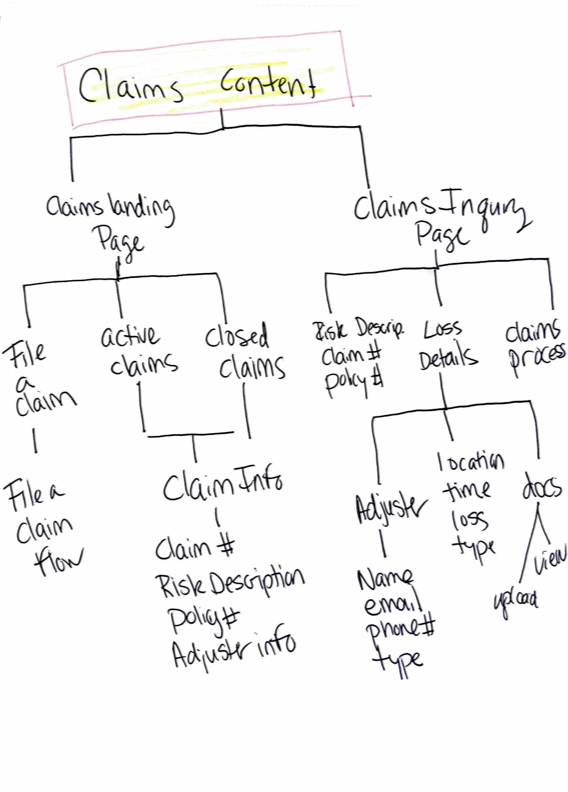
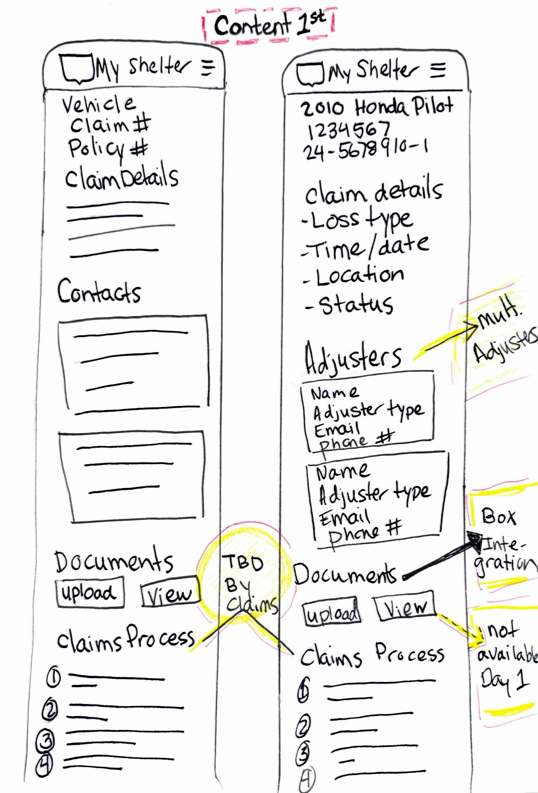
Before moving into high‑fidelity designs, I explored multiple layout and hierarchy options through quick, mobile‑first sketches. This allowed me to validate structure, information grouping, and progression early before investing in detailed UI.
From buried to accessible
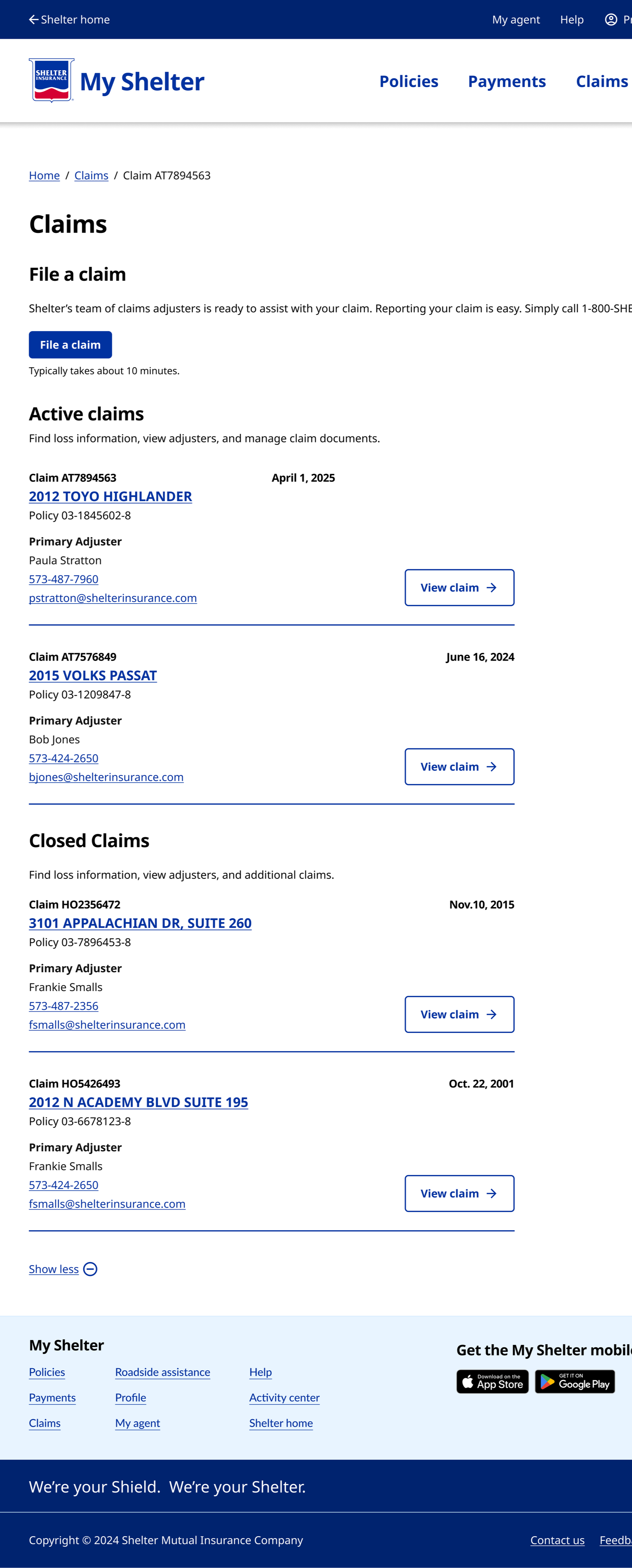
Refining the claims experience transformed how customers find and manage their claims, shifting from hidden, fragmented access to clear, dedicated entry points.
Claims list
Before: Customers had to scroll through the policy page to locate their claims, making discovery slow and error‑prone.
After: Customers can now access all claims from a dedicated claims page, providing immediate visibility into active and closed claims.
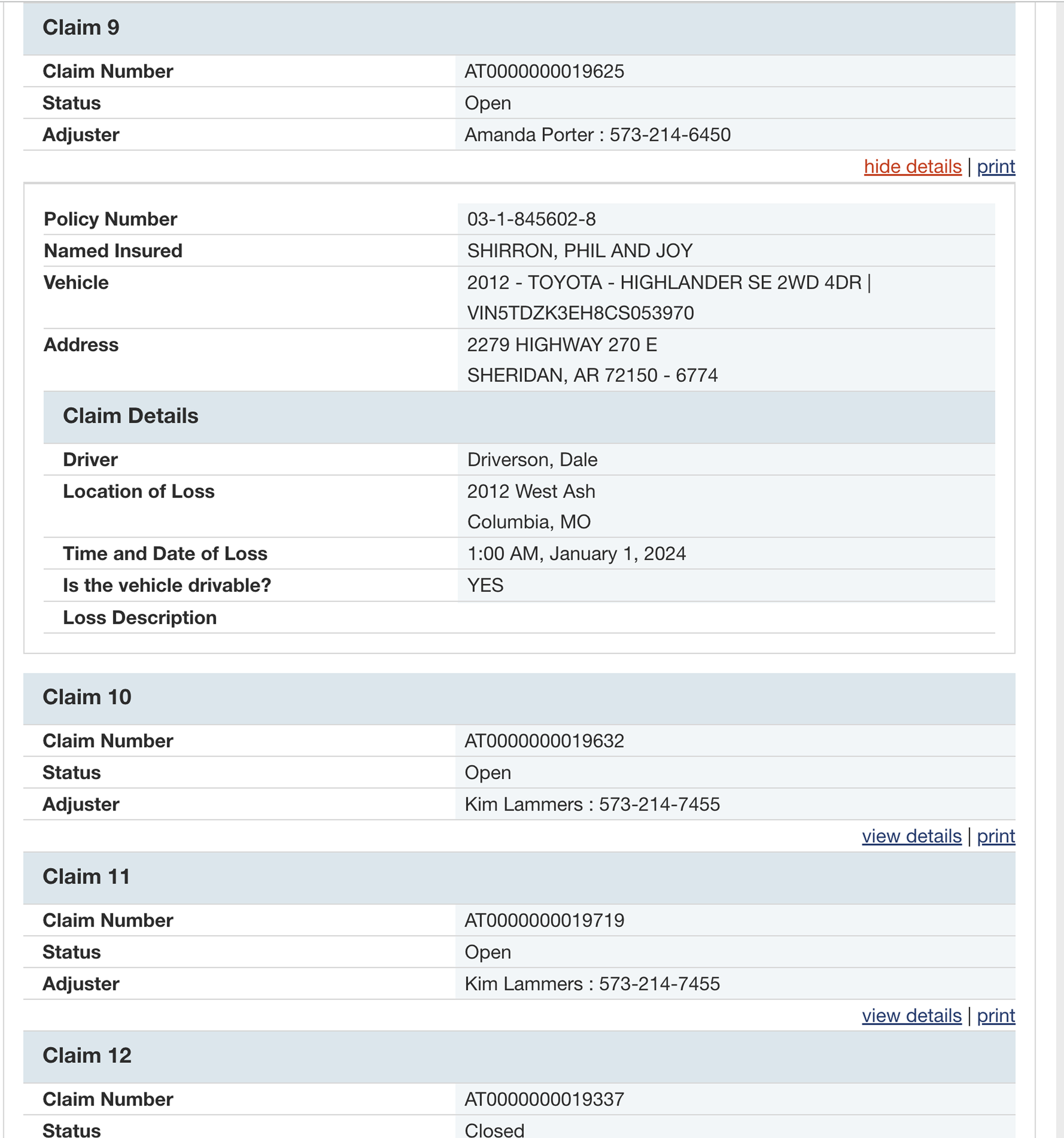
Claims details
Before: Claim details were only available through expandable sections within the policy page, limiting visibility and context.
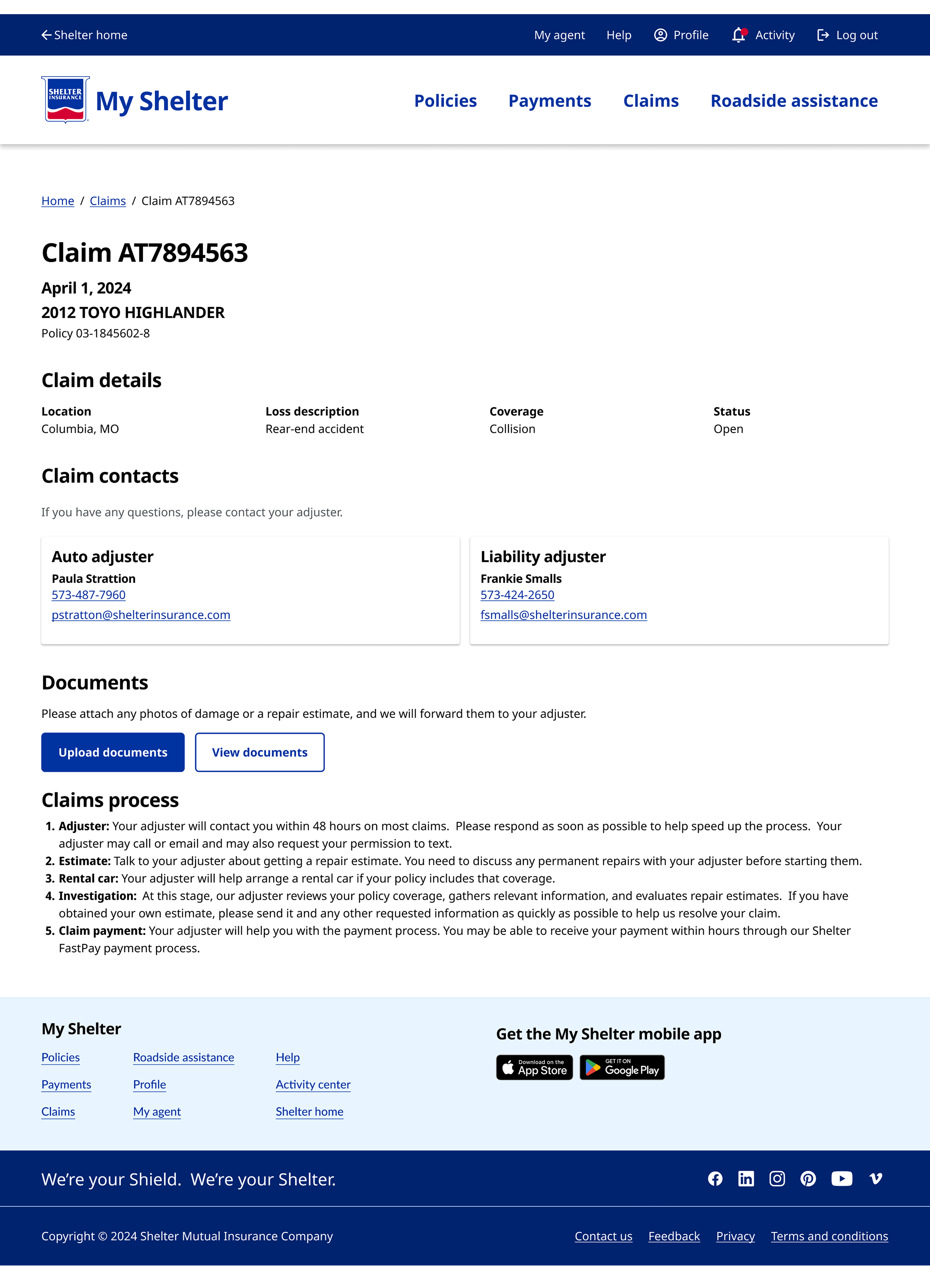
After: Customers can now view complete claim details on a dedicated page, improving transparency, clarity, and ease of use.
A clearer, self‑service claims experience
The final solution provides customers with a clear, self‑service way to understand and manage their claims, replacing buried information and fragmented workflows with a dedicated claims dashboard and focused detail pages.
Prototype demonstrating the claims landing page and claim details experience.

Mobile claims landing page for filing and managing claims.
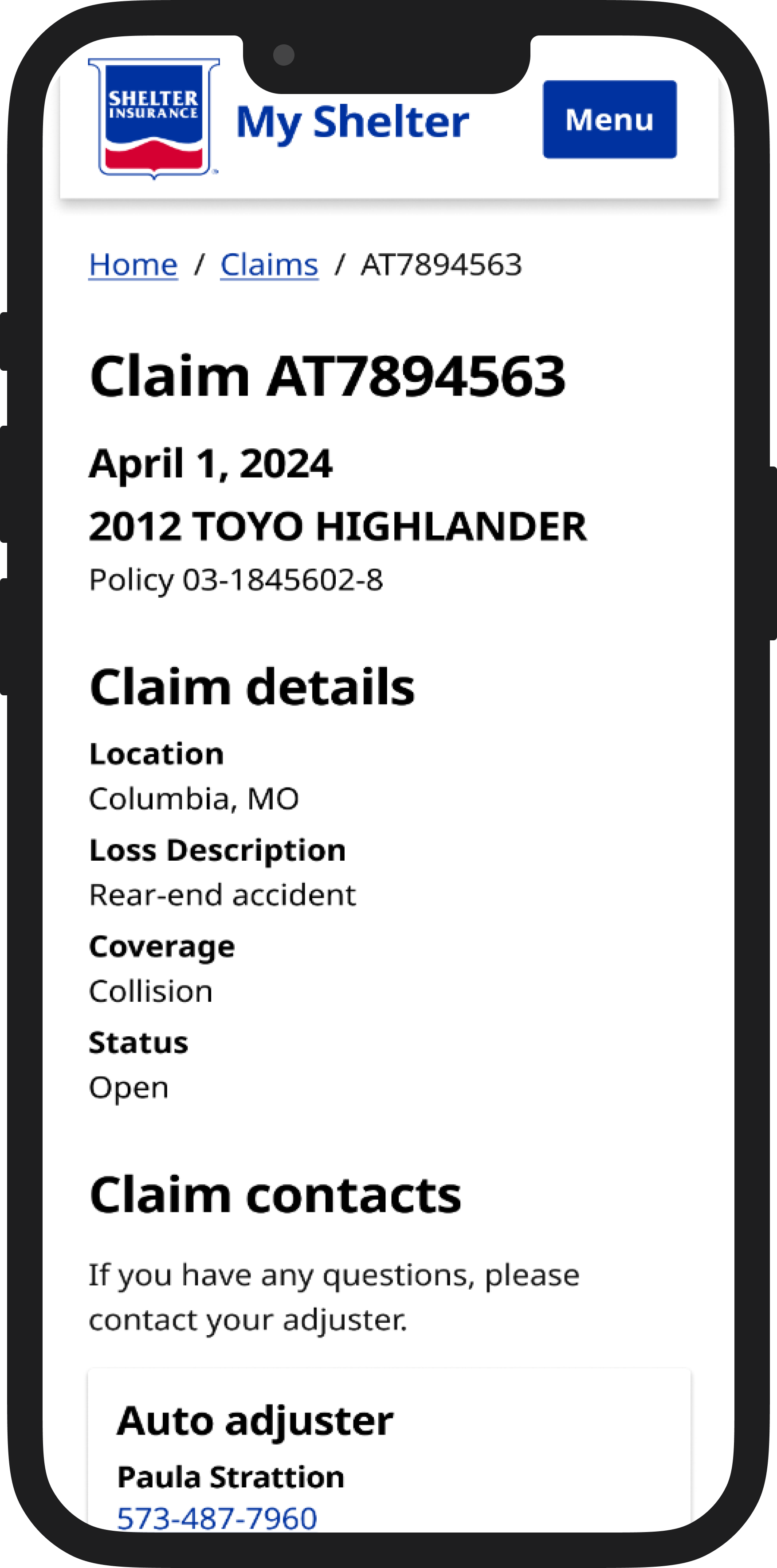
Mobile claim details with clear status, loss details, coverage, and contacts.
Impact
Claims-related calls dropped from 25% to 15% of total customer service volume.
Customers have easier access to all their claim information within their accounts
Clearer claim status and ownership improved transparency and trust